
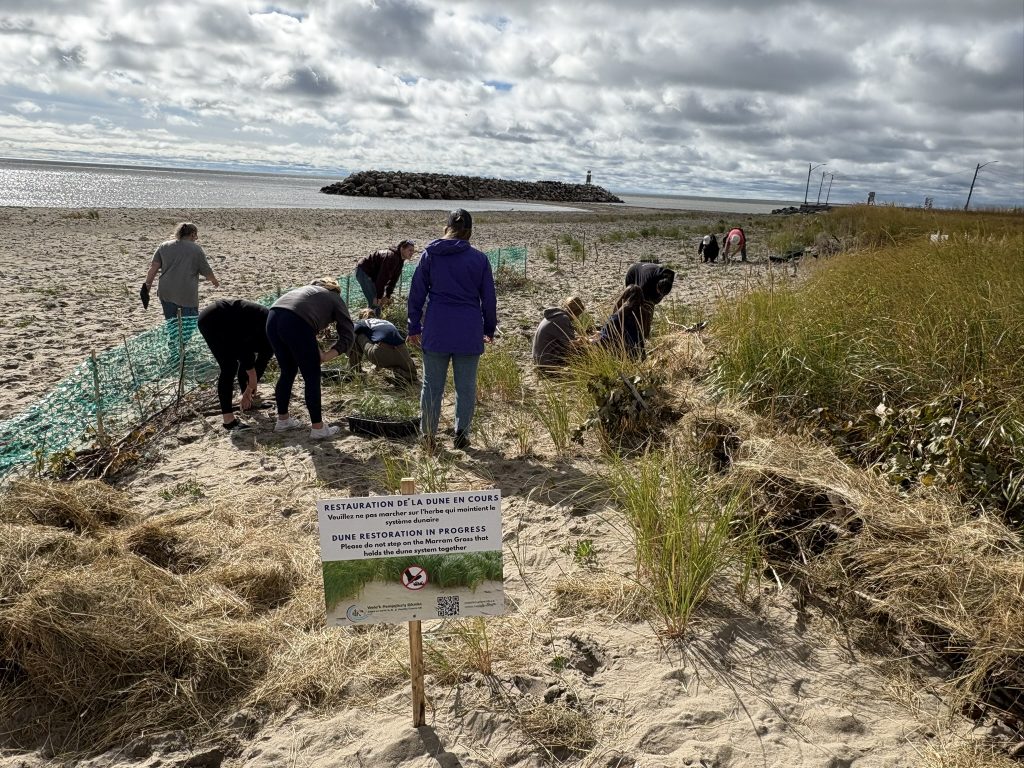
In Pointe-Sapin, Miscou and other areas of the province with degrading coastal sand dune systems, partners have been busy planting and documenting Marram Grass, an important fixture of this local ecosystem that harbors wildlife, protects us from extreme weather and offers a place for people to rest.
Top photo : Students from École Monseigneur François Richard went to Pointe-Sapin for a marram grass planting workshop.
Marram Grass (Ammophila breviligulata) is the main plant that holds our sand dunes together.
Rhizomes link the plants, creating a weather-resistant “web” or “carpet” that holds sand in place. Despite its importance to dune structure, marram grass is a very fragile grass. Foot and vehicle traffic damage the plants, creating physical breaches in the dunes where plants no longer grow – a relatively common sight today.
Marram Grass, the Weaver of Dunes – article by Samuel LeGresley (Nature NB)
Various partners of the Healthy Coasts NB program have been planting marram grass to help patch and restore dunes that were damaged by weather events and trampling.
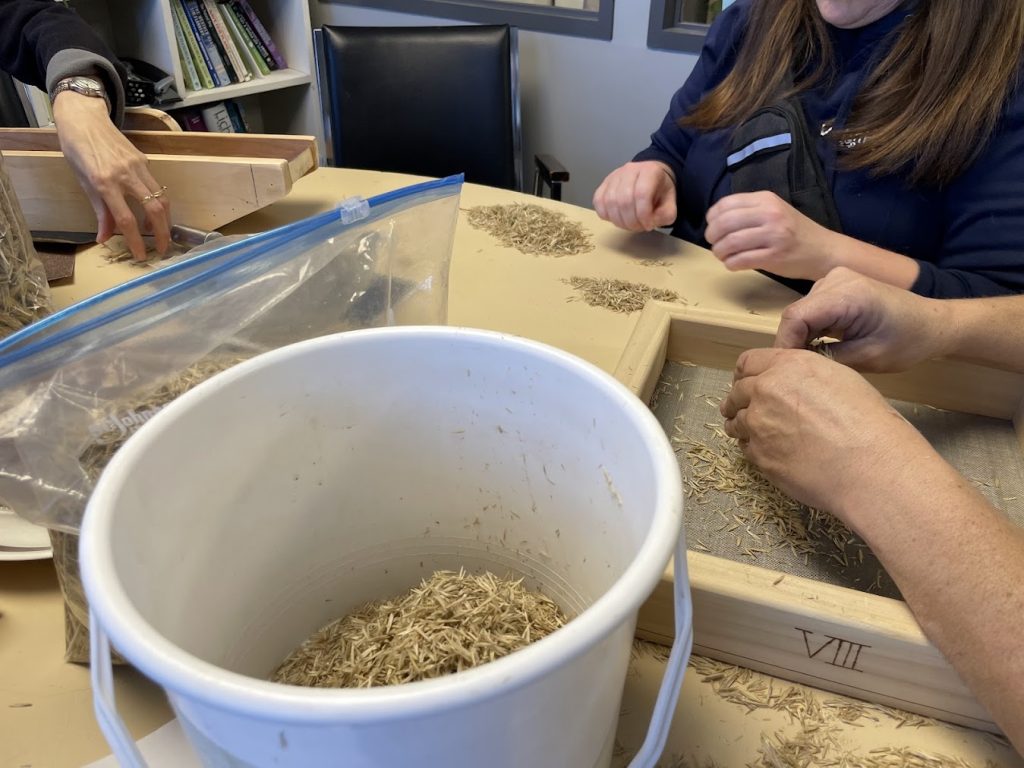
And Vision H2O, based in Cap-Acadie, has been supplying marram grass seedlings for some of the plantings.
Here is the beginning of that process.
The plants grown by Vision H2O were then planted in Pointe-Sapin, NB by students from École Mgr-Marcel-François-Richard (a high school in Saint-Louis-De-Kent).
A buffer fence was placed, along with a dead hedge made of woody and coniferous material.
Signs were installed to inform people about the sensitive nature of the Marram Grass seedlings that were planted in front of the receding dune.
For more information on Healthy Coasts, visit coasts.naturenb.ca.